Biotechnology as an enabler for the next generation of food and beverages
At BRAINBiocatalysts, biotechnology is applied with a strong focus on industrial relevance, scalability, and performance in real food and beverage manufacturing environments.
The global food and beverage industry faces increasing pressure from raw-material variability, sustainability targets, regulatory constraints, and rising expectations for product quality and functionality.
Addressing these challenges requires technologies that operate with high specificity and robustness and can be integrated into existing industrial processes. Industrial biotechnology, particularly enzymes, food cultures and microbial production strains, provides this capability.
At BRAINBiocatalysts, biotechnology is applied with a strong focus on industrial relevance, scalability, and performance in real food and beverage manufacturing environments.
Microbial Resources as a Foundation for Food Innovation
Microorganisms are at the core of many food and beverage processes, from traditional fermentations to the production of functional ingredients (e.g. vitamins, dyes, flavoring substances).
BRAINBiocatalysts draws on an extensive collection of food cultures originating from artisanal fermented foods and plant-associated ecosystems. These strains form the basis for targeted screening and development projects addressing defined technological challenges.
Typical application areas include:
- Fermented foods such as bakery products, vegetable fermentations, and dairy-adjacent processes, where strain selection influences textures, flavor development, and process robustness.
- Functional food ingredients, where specific metabolic activities of the microorganisms are required to generate or modify compounds relevant to nutrition, texture, or stability.
“We have developed a sustainable fermentation approach that uses specialized microorganisms to convert raw materials, including production side streams, into innovative products. We primarily use this technology in the food industry to create innovative products.
Rather than providing off-the-shelf cultures, BRAINBiocatalysts focuses on specifically developing strains with clearly defined performance parameters, aligned with industrial process conditions and food-regulatory requirements.
Fermentation and Side-Stream Valorization in Beverage Applications
Fermentation is increasingly used as a tool to improve sustainability and resource efficiency in beverage production. BRAINBiocatalysts works on biotechnological concepts that convert agricultural and food-industry side streams into valuable beverages and ingredients.
Examples of applications include:
- Fermented non-alcoholic beverages, where selected microorganisms are applied to create differentiated flavor profiles and functional attributes.
- Valorization of viticulture side streams, such as grape vine-derived materials, through controlled fermentation processes that transform non-utilized raw materials into new beverages and food-relevant ingredients.
From a technical standpoint, these applications require microorganisms capable of handling heterogeneous substrates under variable process conditions. BRAINBiocatalysts combines microbial screening with process-oriented development to support scalable and reproducible fermentation concepts.
Advanced Strain Development for Industrial Food Fermentation
Food and beverage fermentations impose demanding conditions on production strains, including temperature fluctuations, and changing substrate composition. BRAINBiocatalysts applies advanced strain development approaches to improve robustness and performance while maintaining food-grade suitability. Optimized strains enable high productivity, more predictable fermentations, reduced batch variability, and greater flexibility in raw-material sourcing.
Enzymes as Precision Tools in Food Processing
Enzymes enable selective and efficient reactions that are essential for modern food processing. BRAINBiocatalysts applies enzyme discovery, screening, and optimization technologies to develop biocatalysts tailored to specific food and beverage applications.
Representative application examples include:
- Baking applications, where enzymes are used to modify dough properties, improve volume and crumb structure, or stabilize product quality despite fluctuating flour characteristics.
- Dairy and dairy-alternative processing, where enzymes support texture formation, protein modification, or improved processing efficiency.
- Plant-based food processing, where enzymatic solutions help improve functionality, reduce off-notes, or enable cleaner processing routes.
Enzymes are developed with a focus on activity profiles, process stability, and compatibility with industrial operating windows, enabling measurable improvements in efficiency and product consistency.
At BRAINBiocatalysts, enzymes and microbial strains are developed with production, scale-up, and industrial integration in mind. The focus lies on translating biological insight into solutions that address concrete production challenges in the food and beverage industry.
For business developers and R&D teams, this means
- access to biocatalysts and production strains that can be integrated into existing manufacturing processes enabling improved efficiency,
- new product concepts, and
- progress toward sustainability goals through industrial biotechnology.
Application example: Egg yolk modification
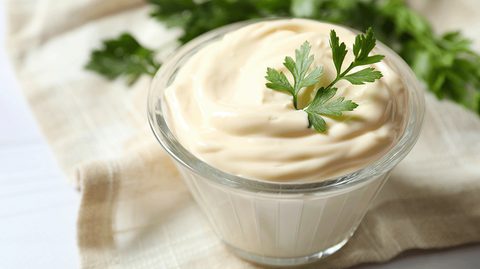
Building on successful launches such as our Lipomod® 833L2 lipase, we bring not only enzyme development expertise but also deep application know‑how. Lipomod® 833L2 is a phospholipase A2 that modifies egg‑yolk phospholipids to create lysophospholipids, significantly enhancing emulsification performance. This results in more stable, viscous, and heat‑resistant products, benefits highly valued in applications such as mayonnaise and other emulsified foods.
This combination of enzyme innovation and real application understanding allows us to help customers translate enzyme functionality into measurable product improvements.
Learn more about Lipomod® 833L2 and further application examples