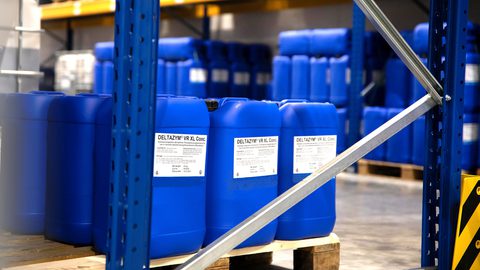
End-to-end enzyme development - A better way to innovate
Moving an enzyme from lab work to large-scale manufacturing is rarely straightforward. Results that look promising in small experiments often don’t carry over to industrial scale.
Many companies rely on different partners for each stage of the process for
- enzyme development,
- bioprocess development and scale-up, and
- contract manufacturing.
When development and manufacturing are handled by different organizations, this usually leads to delays, lower yields, and repeated troubleshooting.
Common issues include changes in fermentation behavior at larger volumes, longer processing times that affect product quality, and inefficient transfer of know-how between teams.
BRAINBiocatalysts addresses this by working in a single, coordinated CDMO setup by combining the expertise of tightly integrated contract research and contract manufacturing expert teams.
Enzyme development and manufacturing are connected end-to-end which helps avoid typical handover issues and keeps projects moving without unnecessary setbacks.
Enzyme, strain & bioprocess development
The work begins at our RESEARCH & INNOVATION CENTER where our expert teams in enzyme technology, microbial strain development, and bioprocess development work side by side. Through interdisciplinary collaboration, new enzymes are discovered, optimized using rational engineering, and high-performance microbial production strains are constructed.
Maximizing enzyme production titers
At laboratory scale, enzyme production titers are maximized. Common microbial production strains for enzymes at BRAINBiocatalysts include bacteria like E. coli and Bacillus, yeasts like Komagataella phaffii and filamentous fungi such as Aspergillus.
To ensure these high titers translate into equally high yields at fermentation scale, our fermentation processes are designed with scalability in mind from the very beginning. Instead of relying on trial and error, the team defines key process parameters early and tests them systematically. Key conditions including pH, temperature, oxygen levels, and feeding strategies are adjusted using structured experimental designs and process models. This allows a controlled stepwise scale-up from small lab volumes to pilot scale of up to 200 L. Cell bank generation is included at this stage, ensuring a stable and reproducible starting point for later manufacturing.
Downstream processing is developed alongside fermentation to avoid bottlenecks later. Available tools include filtration systems, centrifuges, and tangential flow filtration (TFF) units at different scales. For higher purity needs, chromatography is also available. Analytical work (instrumental analytics and assays) supports all steps, covering process monitoring, validation, and stability.
This early integration creates the foundation for efficient technology transfer into our PRODUCTION OPERATIONS unit.
Scale-up and manufacturing
Once the process is established at pilot scale, it is transferred to our MANUFACTURING OPERATIONS unit. The transfer follows a structured approach to ensure that performance remains consistent when volumes increase.
- Initial runs at 750 L are used to confirm the process under manufacturing conditions. From there, production can move to 10,000 L fermenters, with additional production capacity available as required.
- Downstream processing at this stage includes large-scale centrifugation, filtration, and chromatography.
- Final products can be delivered as liquids or dried powders using spray drying or freeze drying, depending on requirements.
All work follows relevant regulatory standards, whether for pharmaceutical, food, or specialty enzyme applications, including requirements such as Kosher and Halal certification.
Move faster with an integrated biotech organization
As a strong end-to-end partner we provide true experts at every stage of development. At BRAINBiocatalysts, each technological field is also offered as a standalone service. This means every capability must represent the state of the art, and our scientists must be recognized experts in their respective fields to meet the high customer expectations.
The strength of the BRAINBiocatalysts setup lies in bringing our specialized expert teams together into one seamlessly integrated workflow. Through close collaboration, aligned processes, and continuous communication, the modular capabilities are combined into a single end-to-end offering.
What does this mean for you?
- Faster time to market with one integrated partner from enzyme development to manufacturing
- Lower project risk by designing enzymes, strains, and processes for scalability from the start
- Higher yields and consistent quality through integrated expertise across the entire process
- Smoother scale-up from lab to industrial production with fewer handover issues and less troubleshooting
- One trusted partner with expert teams at every stage
How we found an alternative genome-editing platform for engineering industrial strains
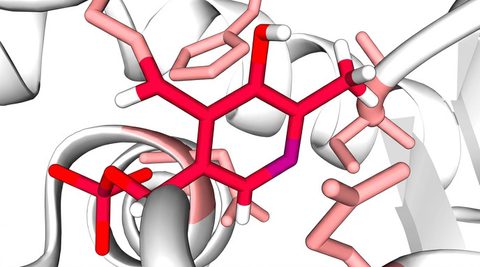
This case study shows how we took a holistic approach and combined technologies to provide a more efficient enzyme tailored to the needs of a specific industrial application.

It's more than just experience and knowledge

Alternative proteins continue to attract significant investment, precision fermentation is gaining commercial momentum, and consumer demand for health-focused products remains central to food and beverage development.
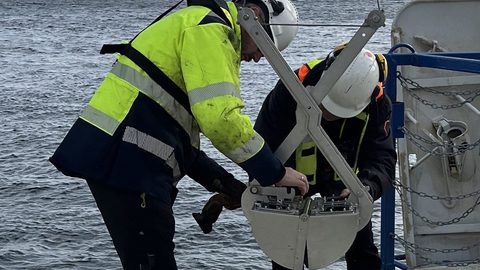
Deep-sea metagenomes provide access to unique genetic diversity for pharmaceutical, food, feed, beverage and other industrial applications
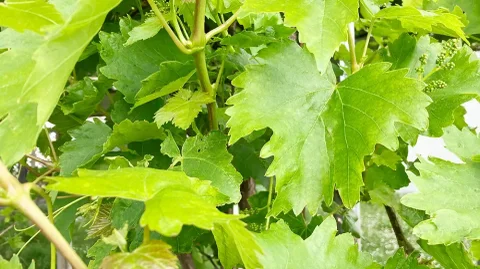
Side streams can be transformed into innovative products: An example from the wine industry

From maximising extract and improving lauter performance to supporting yeast health, clarity and shelf stability, enzymes quietly solve some of the brewing industry’s toughest challenges.

Accelerate enzyme discovery with the MetXtra™ technology platform and pave the way for your breakthrough in industrial biocatalysis
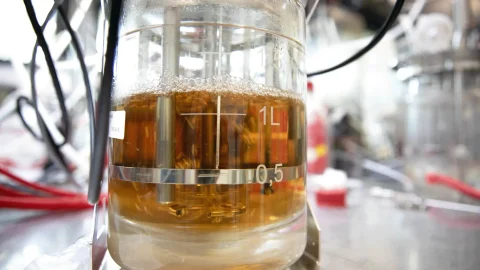
It can be difficult to produce CRISPR nucleases for use as RNPs. This case study demonstrates how we found a solution.
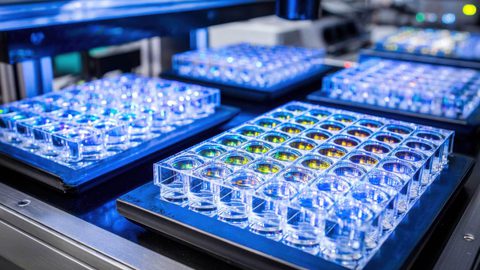
Finding the right enzyme quickly with our directed enzyme panels.
When every stage of enzyme development is connected, innovation moves faster, risks are reduced, and better outcomes become possible.

Implications for metagenomics, microbial strain collections, and enzyme discovery using digital sequence information
