Methanol-free and scalable: An industry ready protein production system in Komagataella phaffii
The methanol-free K. phaffii system developed by BRAIN Biotech offers significant advantages for the production of proteins and enzymes. In addition to strong induction, scalability is also crucial for bringing products to market quickly. Read how we demonstrated the strain’s performance at scale.
The increasing market demand for recombinant proteins requires production platforms that balance high volumetric productivity with operational safety. While Komagataella phaffii (Pichia pastoris) serves as a reliable eukaryotic host for protein and enzyme production, traditional reliance on methanol induction for gene expression introduces significant thermodynamic challenges, toxicity risks, and regulatory complexities related to explosion protection (ATEX).
To address these bottlenecks, BRAINBiocatalysts provides a solution that decouples strong gene expression from methanol dependency, ensuring a robust, sustainable, and cost-efficient bioprocess.
Market demand as key driver for the development
We have developed a proprietary methanol-free, inducible expression system for K. phaffii that enables industrial protein production with high titers while avoiding the hazards, costs, and regulatory burdens associated with methanol induction. The platform uses non-toxic, food-grade inducers (multiple options) to reduce cellular stress during growth and achieve titers competitive with classical methanol-based processes.
Building on this foundational expression platform, we characterized process robustness at pilot and larger scales. Following clonal selection of expression strains, processes have been translated to 2 L bioreactors to define Critical Process Parameters (CPPs), including induction kinetics, feed strategies, and media composition.
Optimization of the process temperature and systematic evaluation of different inducers proved critical for achieving robust performance. Especially, the optimal process temperature is essential for managing heat transfer and biomass productivity when transitioning to pilot and larger scales.
Transfer to industrial production facilities
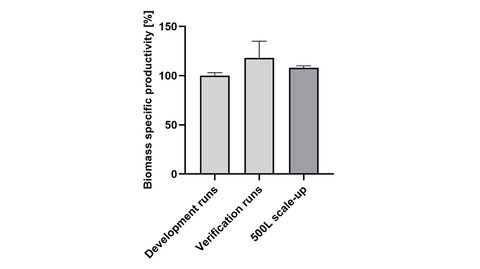
For the validation of methanol-free production processes, optimized processes were transferred to our manufacturing facility. Following seed-train validation to ensure consistent inoculation, verification runs at 2 L scale confirmed the results from the development runs.
Next, processes underwent a successful 2 L to 500 L direct scale-up, demonstrating robustness without any intermediate steps. The maintenance of product titers and quality across scales confirms the scalability and industrial readiness of our methanol-free K. phaffii expression system and bioprocess. The established process parameters make further scale-up straightforward.
A subsequent scale up to 10 m3 can now be easily and efficiently executed within our own facility, while a large-scale transition to 50 m3 and beyond at our partner facilities is readily achievable.
Our experience with BRAINBiocatalysts´ methanol-free production system shows that it is an efficient, scalable, and robust system, from inducer performance to larger fermentation scales, that simplifies and accelerates the path toward commercial production.
(A patent has been granted for in December 2025.)
How we found an alternative genome-editing platform for engineering industrial strains
This case study shows how we took a holistic approach and combined technologies to provide a more efficient enzyme tailored to the needs of a specific industrial application.
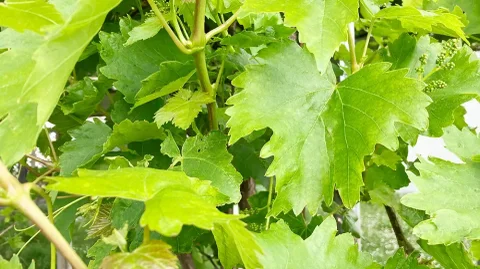
Side streams can be transformed into innovative products: An example from the wine industry

Accelerate enzyme discovery with the MetXtra™ technology platform and pave the way for your breakthrough in industrial biocatalysis
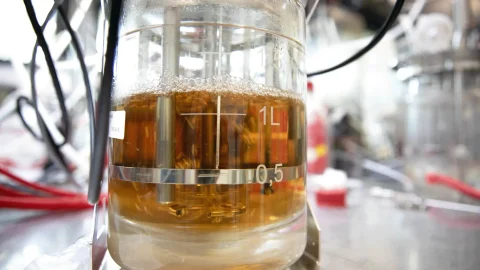
It can be difficult to produce CRISPR nucleases for use as RNPs. This case study demonstrates how we found a solution.
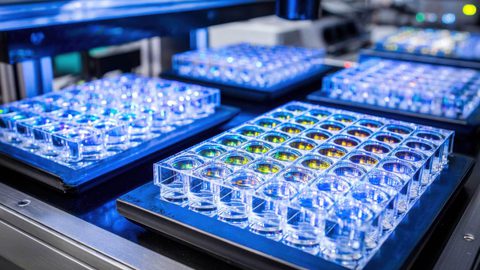
Finding the right enzyme quickly with our directed enzyme panels.
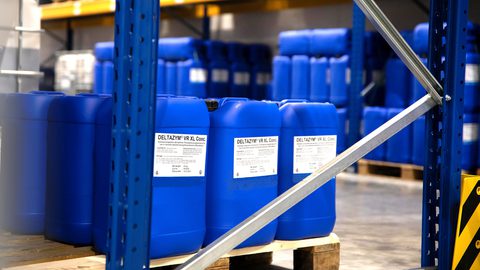
When every stage of enzyme development is connected, innovation moves faster, risks are reduced, and better outcomes become possible.
An enzyme engineered version of BRAIN Biotech´s CRISPR-BMC with superior properties in yeasts accelerates development of high-performance strains.

Quickly assess whether Aspergillus niger is the right production host